 Menu
 Close

 en
 fr
 nl

PRESS RELEASE
With a major investment in the CAPRA cheese dairy in Halen, Agrial is taking an important step towards making its industrial activities more sustainable. Thanks to this project, CO₂ emissions at the production site will be reduced by as much as 79%, while almost 20,000 m³ of water will be saved annually. The CAPRA production site is the first site within the Agrial Group to benefit from climate-related investments on this scale. The project therefore marks a major first milestone in the cooperative’s Climate Plan, combining environmental benefits with industrial performance and a sustainable future for the European goat dairy sector.
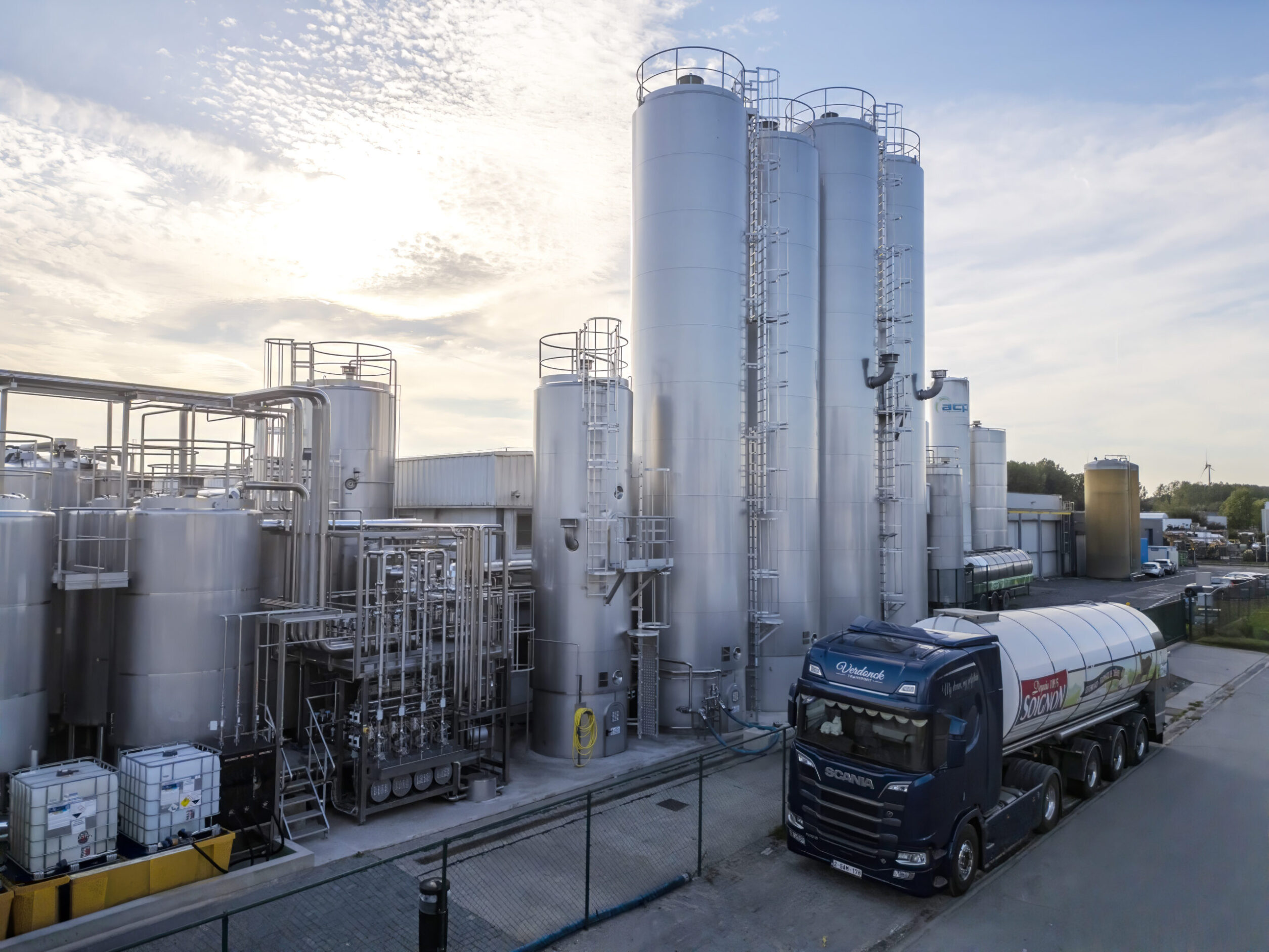
CAPRA, a Belgian cheese dairy established in Halen in 1982, is part of Agrial’s dairy division. Specialising in goat milk processing, the dairy is now one of the group’s strategic sites for the development of the goat dairy sector in Northern Europe. Every year, the site collects 60 million litres of goat milk from 48 partner farmers across the Benelux. CAPRA subsequently produces between 9,000 and 10,000 tonnes of cheese annually, including matured goat cheese logs and fresh pyramids. Its cheeses are sold in Belgium and across several European markets, including under the Soignon brand.
A structural investment as part of Agrial’s Climate Plan
Through this project at the CAPRA site, Agrial is putting one of the key pillars of its Climate Plan into practice. The plan aims to structurally reduce the environmental impact of the group’s industrial activities, with particular attention to CO₂ emissions, water consumption, transport and the improved valorisation of production by-products. The CAPRA site is the first location within Agrial where this climate ambition is being realised on such a scale.
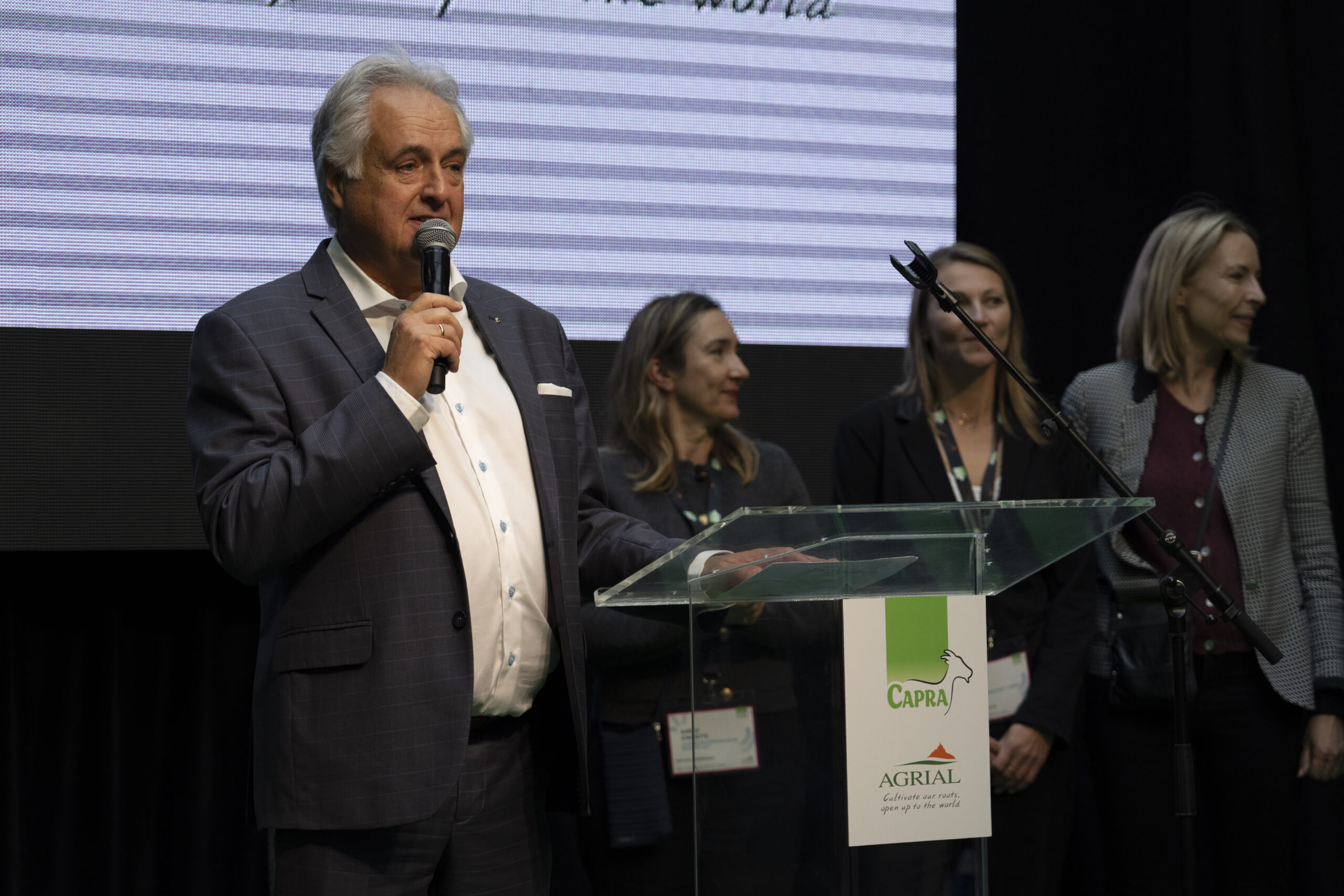
For CAPRA, this investment goes far beyond the installation of new technologies. “This investment represents a major modernisation of our industrial infrastructure and another step towards making our production more sustainable. It also means we are preparing our Halen site for the future,” says Guy Hex of CAPRA. “Thanks to Agrial’s support, we can also embed this transformation in a long-term vision, benefiting not only our production activities, but also our partner farmers and the entire goat dairy sector.”
Less transport, lower emissions and reduced water consumption
Thanks to innovative reverse osmosis technology, the site can concentrate permeates from milk and whey by a factor of four to five. This significantly reduces the volumes that need to be transported and cuts the site’s CO₂ emissions by 79%. The project also makes it possible to recover part of the water contained in the milk and reuse it. This results in annual water savings of almost 20,000 m³, representing 23% of the site’s yearly water consumption.
“This project gives very concrete expression to Agrial’s climate ambitions,” says Julien Heillaut, CEO of Agrial. “At CAPRA, we are simultaneously working to reduce our carbon footprint, use water more efficiently and improve the valorisation of by-products. In doing so, we are investing both in the sustainable transformation of our industrial sites and in the future of the European goat dairy sector.”
Flemish Minister for the Environment and Agriculture Jo Brouns also emphasises the importance of this investment. “With this investment, CAPRA demonstrates its confidence in the future of our agricultural and food industries, which sends a strong message today,” says Flemish Minister Jo Brouns. “Following the dry summers of recent years, we know that we need to manage water more intelligently and efficiently. Every cubic metre of water treated and reused here is a cubic metre that does not need to be extracted elsewhere. This benefits both the company and its surrounding environment. This project proves that economic and environmental interests can go hand in hand. I am therefore pleased to see that an international group such as Agrial has chosen Halen as the location for its first investment in sustainability measures on this scale.”
New market opportunities for better valorisation of dairy by-products
In addition to the environmental benefits, this investment also opens up new opportunities for the economic valorisation of milk by-products. Until now, these streams were used in the pig farming sector. From now on, they will be separated, concentrated and put to better use through new sales channels. Sweet permeate, for example, can be used in calf feed, while acid permeate can be better valorised within existing animal production chains. This development will enable CAPRA to make better use of its by-products, contributing to the overall performance of the site and the sustainable development of the European goat dairy sector.
According to Bernard Guillard, Chairman of Agrial, this approach is closely aligned with the cooperative’s broader mission. “Our mission is to create sustainable market opportunities for the farmers who place their trust in us and to support agricultural sectors with a future. With CAPRA, we reaffirm our ambition to further develop the European goat dairy sector sustainably, while preparing our industrial infrastructure for the economic and environmental challenges of the years ahead.”